Continuing last week’s look at the 5 must play exclusives for the DS.
Lunar Knights
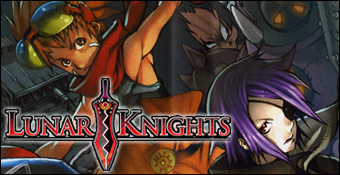
Hideo Kojima is probably a name you’ve of, he’s the mad man behind the Metal Gear Solid series as well we the upcoming foetus carrying simulator. One of his weird side projects were the Boktai games, GBA games with sun sensors built into the cartridges so you’d use real world sunlight to fight vampires. It was an interesting idea but as Brit where for 90% of the year the sun seems like a myth I didn’t them. Fortunately Lunar Knights is a new game in the series and with the move to DS there was no longer a sun sensor in the cartridge which allowed me to play it on a cold dark night like I do most of my gaming.
The actual sun requirement might be gone but light is still a key component with a twist for this game, there is now a duo of protagonists; Lucian a dark swordsman who can channel the power of moonlight and Aaron who uses sunlight for his solar powered gun. They are your typical hero and anti-hero pair think something like Naruto and Sasuke. The game handles the dynamics of the pair really well, it implements a day night cycle that naturally gives an advantage to whichever character can absorb that periods light. But it reinforces that simple element effectively so you aren’t just using that one character that can get the current light, Lucian uses a sword but Aaron uses a gun which gives him an obvious range advantage however if he runs out of light his gun won’t work at all whereas Lucian’s sword can still be used if he runs of his energy (albeit weaker damage with no energy) so you’ll want to use for that reason but with the close range you are more at risk of damage. Due to this the game is properly incentivising you to actually make full use of both characters rather than just focus on an bulk up just one character which is often a problem with multi interchangeable character games.
The gameplay is an isometric action game with some RPG elements which is nice as you don’t see many games using that kind of perspective nowadays. There’s a good variety of abilities including unlock different elemental animal companions with different enemies have different weakness incentivising this variety in the combat. There’s even a basic stealth system with the ability to blow into the microphone to whistle to attract enemy attention, which is a nice touch for a Kojima game.
Another component of the game is that the vampires have developed a ‘parasol’ system that controls the weather to block sunlight from reaching Earth. As you defeat bosses you get more access to this system allowing you to change to different climates, this unlocks different parts of dungeons giving some good replay value to the game. This is useful as the game can be pretty tough so going back to earlier dungeons to level up and get better equipment is pretty useful.
People really seemed to more directly follow Kojima after Konami’s treatment of him, os maybe now’s the time to go back and look at his earlier work.
Solatorobo Red the Hunter
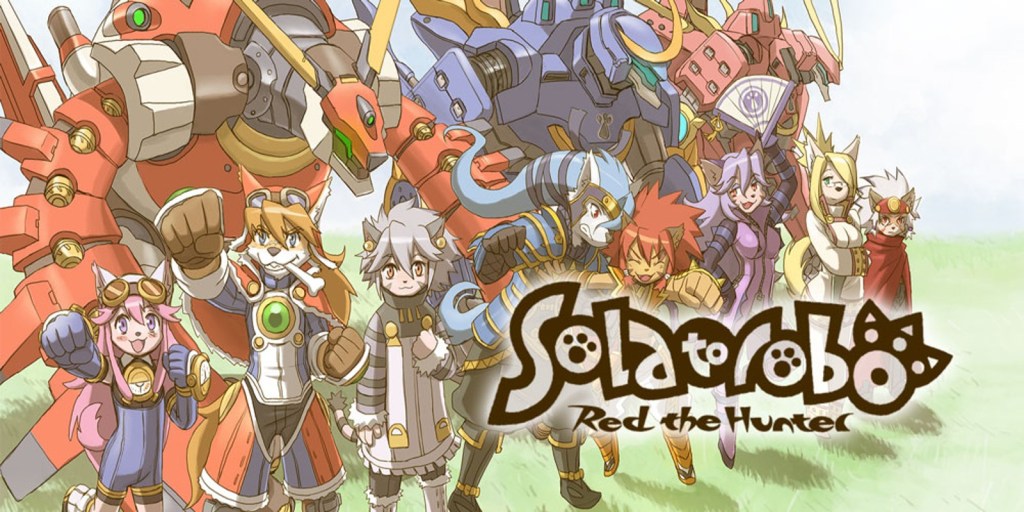
Solatorobo is an RPG and when I say that I’m sure that people imagine certain genre stereotypes but Solatorobo kind of defies those stereotypes to do its own thing.
Unsurprisingly from its title you play as Red who’s a hunter (I’m sure you came here for this kind of in depth analysis). In this universe a hunter is basically a PG version of a mercenary giving you an excuse to take on odd jobs. Red himself is an anthropomorphised dog who rides a mech. The game has a very nice style with its character designs being distinct and memorable with lots of colour splashed over the world (for example Red wears red). The writing for the characters and stories is enjoyable as well but I don’t want to go into details on them for the risk of spoilers, but one unique element is that when the credits roll you are only half way through the game, it is essentially split into two story arcs with the same characters, like different seasons of a TV show which I found interesting as normally game stories operate like a snapshot of a character’s experience with an adventure.
In terms of gameplay the combat is one area that definitely stands out by utilising Red’s mech. The combat is entirely built around grabs and throws which is pretty interesting as they are normally just side options to the main object. You grab/pick up objects, enemy projectiles and even enemies themselves to throw at enemies, you can even catch thing mid-air as they bounce back to throw them again. There’s not a lot of depth to the combat but since there’s no other games with combat quite like it the combat system stayed interesting and fun for the duration.
Another big element of the game is its side quests, Red’s profession mean that he’ll take any miscellaneous odd jobs that are available, and the developers were no afraid to throw stuff at the wall and see what sticks, there’s a lot of variety and experimentation to the extent that you might even expect to see more of some of these mechanics. An example of this kind of experimentation is with the standard side quest choice of fishing, rather than the usual process of standing by a lake with a fishing road you are instead hunting giant creatures through a sea of cloud using a harpoon attached by a chain to your mech, it’s a fresh take on a standard gaming staple.
And that’s how I’d describe the whole game, to me Solatorobo was a really fresh and unique experience, though apparently it is a spiritual sequel to a lesser known PS1 title Tails Concerto, but given its PAL release was only in France for me Solatorobo will stay standing out as a fresh experience that can only be found on the DS.
Custom Robo Arena
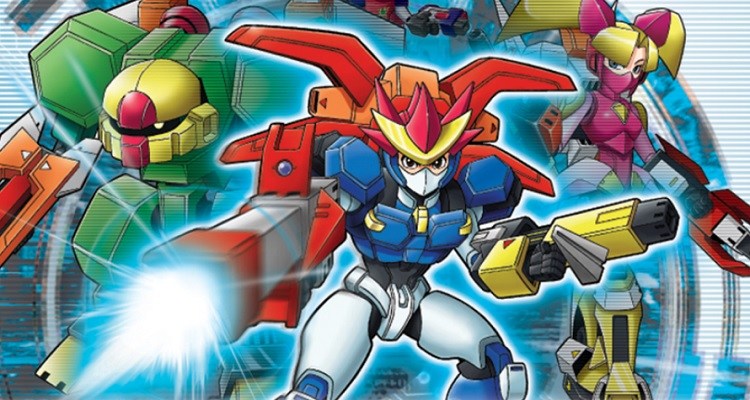
One phrase that annoys me in game reviews is “it’s like Pokemon” as its used to describe anything with monster collecting; I’m never going to tell a little kid to play Shin Megami Tensei because they like Pokemon. It’s my equivalent of people getting frustrated at the phrase “it’s like Dark Souls” being used to describe a game having any level of challenge. So how would I describe Custom Robo Arena? Well it’s like Pokemon…
In Custom Robo Arena you play as a kid who gets his first custom robo, a customisable little robot used for battling other robots, then goes on a quest to become the very best like no one ever was by going on an adventure to win tournaments and eventually take down the champion, while along the way you must thwart an evil organisation intent on using the robots to take over the world. Yeah it’s your standard expected children’s anime storyline, they’ve basically just swapped out Pikachu for a mini robot.
The key game component that always draws Pokemon comparisons is collecting so obviously that’s a key facet of this game, you aren’t collecting monsters but instead gathering up different parts that you can customise your robot with, there are alot of parts you can collect with every robot being made up of five part types; the main body, guns, bombs, pods and legs. These provide a lot of variation in terms of the robots so you can really tailor your robot to your particular fighting style. Again similar to how Pokemon let’s you know what you opponent is going to send in next so you can choose a counter, in Custom Robo you can see what parts your opponent’s machine is made of to give yourself the greatest advantage. It really incentivises collecting a wide range of parts.
Obviously those customisations are how you prepare your robot for battle and battling is where you’ll be spending a lot of your time. Your battles take place in arenas that can be populated with obstacles and various configurations of barriers, incentivising you to tailor your robot to work within the arenas particulars. That customisation can add a lot of variety to combat whether you are building them to have have high speed with close range weaponry, or have long range arcing weaponry to attack over barriers if you’ve got a more clustered arena, or various other combinations that could be tailored to your particular play style. It’s this kind of variety in your own robot and in your opponent’s robots that keeps the combat feeling fun for the game.
Describing something like Pokemon might seem a bit dismissive but I love it when a game can take the concept of another and put their own interesting element to it with Custom Robo Arena doing this fantastically.
The DS was a great console, one element of the console that I don’t think gets the appropriate appreciation was it making sleep mode a standard for the console that is a great addition to a handheld console. What games are you frustrated that I didn’t include in this list?

 The David E Gamery