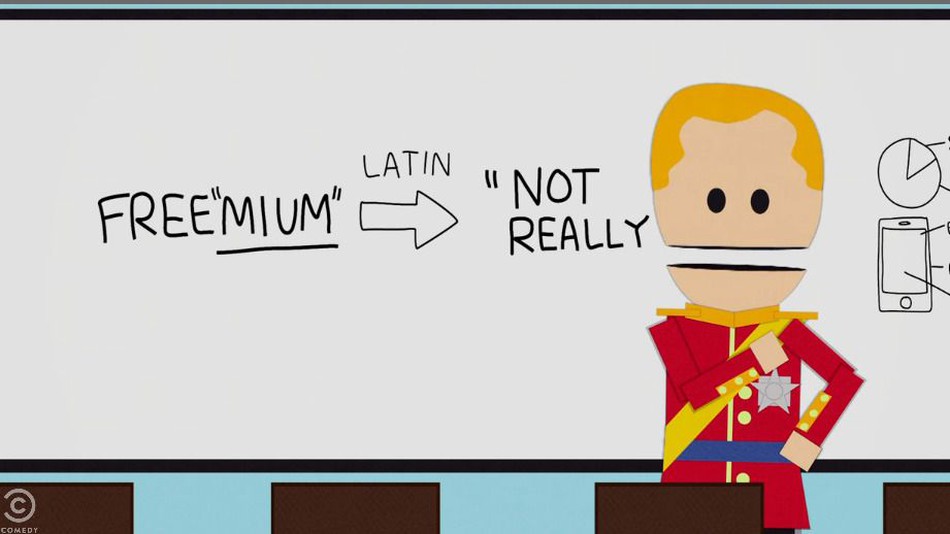
I play a lot of games, but one area really bother with is mobile gaming. I’m not one of those hardcore gamers who dismisses them as casual games, but back in my uni days I did dabble with mobile gaming and my own experience with the free to play elements that are common for this style of gaming left me cold. So today’s let’s look at these problems with free to play gaming.
1) The Waiting Game
The first point is looking at the time limits these games implement. Playing these games you will often encounter a timer popping up where you are either waiting for something to happen or for a chance to play again. Obviously the main idea from this is if you are enjoying it you’ll want to play it more and be willing to pay a little bit to do it generating the company money. But this has a secondary effect, when your playtime is limited you want to maximise it and not let any go to waste, so when the popup comes up saying that the timer is up you will try to go on it as soon as you can so the time isn’t wasted. This enforces playing the game at regular intervals developing it as a routine, when it has been enforced as a routine it becomes harder to quit and a behaviour we do naturally without even thinking about it, and this behaviour is reinforced by the prompts that popup to inform us the timer is up creating a mental association between the prompt and playing the game without even consciously thinking about it. And being negligent about the insidious addictiveness of this kind of thing isn’t exactly the most ethical behaviour on the developer’s part.
2) The Grind
Levelling up has been a longstanding component for rpgs but over time it has spread out into more genres and games, and of course is an incredibly common feature in free to play, so why is this? Well the simple answer is that it makes us feel good; getting a little reward for what we’ve done makes us feel good. And obviously since we like that reward we will continue to play to get these rewards. The progression for these level ups is tied to an exponential curve so later levels require more experience than the earlier levels. The problem with free to play is that they often skew the curve, early on the level ups and rewards are frequent but you’ll find that the amount of experience needed steeply grows. This is done to try and hook the player early on with these rewards so that they’ll then put even more time or money into the game to try and reach the increasingly distant next level.
3) Illusion of Progress
However a problem with the progression in these games is that the progress can often be empty feeling. This is because no matter how much time and effort you put in there is always something just out of reach. This can occur in a couple of different ways; it could be that the content is literally locked behind a pay wall with a separate secondary currency which cannot be gained at a reasonable rate so that a player who wants all the content has to payout for it, while still using the primary currency to give the player the feeling of making progress. The other way is with the luck of the draw, where you can’t just pick the thing you want to get, instead it’s up to random chance. Sometimes if you want to get the most out of it you have to get that specific thing multiple times, this means that for the rarest things the probability of the player getting this essentially goes to the limit of zero, the developer will likely claim a player can but while it is technically true realistically it just isn’t going to happen no matter how much time and effort is put in. Though of course with this system if you want to have a higher chance of getting rare things you can always payout for that.
4) Stacking the Deck
A lot of these games have a throwback retro arcade style where it’s a shorter and simpler game with a focus on replaying trying to improve your skills at it and aiming for a high score, and this high score gets even more competitive with online leaderboards. Except the problem is that the score is not tied exclusively to the player’s skill; no, unlocks, power ups and revives play a key part in this score, in the worst instance of this your unlocks actually act as a multiplier. This opens up the key problem of pay to win where between two equally skilled players the one that pours the most money into these perks gets the high score which complete undermines the competitive element of it as it discards an even playing field in the name of making money, it’s essentially an anti underdog design choice, it’s like if in the karate kid the antagonist was given a shotgun, it is a hell of a lot harder to overcome that through training.
5) Bring a Friend
And now we move onto peer pressure. As I’m sure anyone who’s ever visited facebook will know these games tend to reward pestering friends to play. This has two main reasons for its existence, one it gives free advertising. But I want to focus on the other reason; you are more likely to be competitive with friends rather than random names on a leaderboard with scores so much incredibly higher than what you get, whereas a friend provides a more personal element, who by the laws of probability are much less likely to be at the very top of the leaderboard. And this links back to stacking the deck, your friend that pestered you to play the game will likely already have advantages over you due to playing the game so you’ll be more likely to plonk some money down to even the odds.
I think it’s clear by now that I’m not a free to play fan, but the issue is that avoiding mobile gaming is no longer enough free to play has spread. The most popular game currently is Fortnite and even old games like Crash Team Racing now come with these elements when re-released to a modern audience. Fortunately I have prepared a bunker full of old video games for such a scenario.
 The David E Gamery