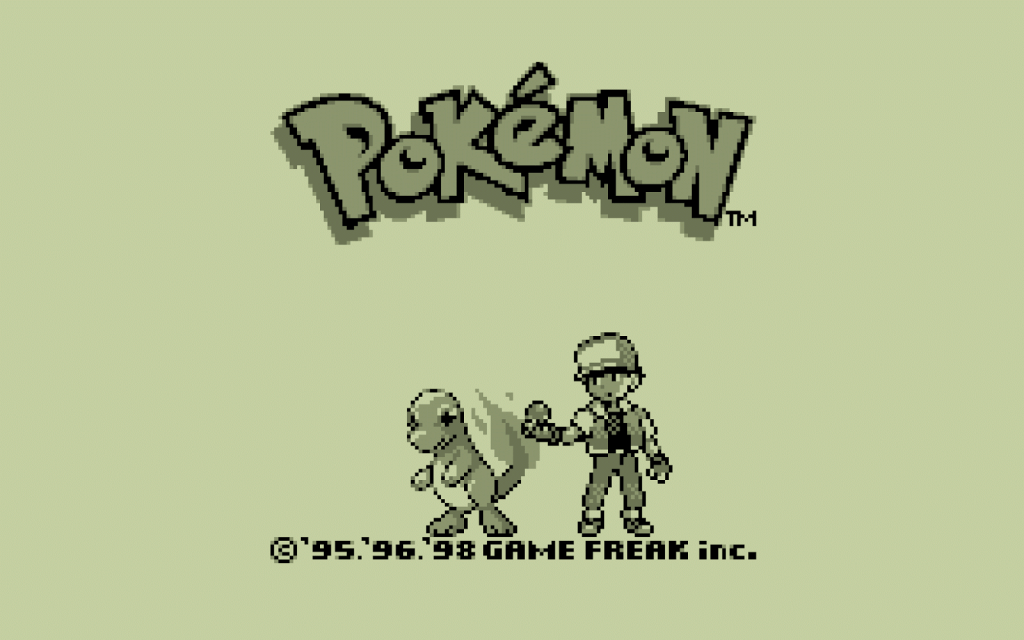
With the release of the new Sword and Shield games now seems like the perfect opportunity to talk about the Pokemon series and why since the original releases they have clearly been the objectively best handheld games ever. Despite what that clickbaity title and opening sentence might imply I’m not saying that Pokemon are the “best” games after all that’s a matter of subjective opinion, instead what I’m talking about is how it has design choices that are specifically tailored to work for a handheld game.
One thing that always annoys me in reviews of handheld games is how you’ll get statements like “the gameplay is split into fifteen minutes segments perfect for portable gameplay on your commute”, which obviously is great if you commute is a multiple of 15 minutes but say you have a journey of 25 minutes then you’ve got 10 minutes (or 40%) that you can’t fit the game into. Nowadays sleep modes have basically solved this issue but back in the Gameboy era this was a big issue, so one of Pokemon’s big advantages was its variable play time.
An annoying element of a lot of JRPG’s are save points which are normally the only points you can save the game and stop playing with little indication of the time there’ll be between this one and the next one which can make planning whether you can continue playing a nightmare. In Pokemon unless you are in battle or in a conversation you can save anywhere and anytime, and it make sure that the parts where you can’t save are kept short.
Most of the battles in the game will be against wild Pokemon where you are only facing a single enemy which keeps these battle times short. The other encounters in the game are against trainers but it pulls off a few other tricks to keep these short as well, in theory all the trainers could carry up to 6 Pokemon but this is very rarely the case and when they do it’s likely to be a set of weaker monsters like a team made up of 6 Magikarps, so while they take longer than wild battles they don’t drag on for too long. To speed up battles with trainers with larger teams Game Freak also stack the odds in the players favour, after defeating an opponent’s monster you are told what they will send out next allowing you to switch in a counter with super effective attacks reducing the time it would take to beat them.
The other part where you can’t save is when you are in conversations, which is why they deliberately keep a simpler story this means that there aren’t any long cutscenes or big exposition dumps so these don’t keep you from saving for long. This structure has a second benefit; the main goal most of the time is to get the next gym badge so if you miss a bit of explanatory text or don’t play for a while it’s easy enough to figure out where to go. This means that the game does not need your full attention at all times which is a big benefit for a handheld game if something outside the game needs your attention like if you are checking whether your bus is near your stop. One other element that adds to this is that the sound is not actually required at all to play which again is good if say you are on a bus and forgot headphones.
The gameplay itself also doesn’t require constant attention, by its very nature turn based gameplay gives the opportunity to turn your attention elsewhere as it is essentially always on pause until you confirm your move. What makes Pokemon interesting is while it doesn’t require moment to moment attention it rewards cumulative attention built up over time. You are rewarded for learning the systems of the games what types are super effective against other types and the kinds of moves and stats each Pokemon has, by learning these you’ll be able to perform better in battles, the greatest example of this is that it allows you to better switch in counters for incoming Pokemon feeding back into the shorter battle time requirements discussed earlier.
The last thing Pokemon did was its two different versions having some exclusive monsters. Given that the tagline was gotta catch em all this necessitated people interacting to trade between the different versions. Given the main target market was children and that these games were on a portable system it made the playground effectively a marketing source for Nintendo, where they’d get free exposure and the peer pressure elements of more kids wanting the game to interact with what the other kids were playing.
All of this came together to make Pokemon the perfect game for a handheld system and gave it enough of a marketing push to make it one of the biggest franchises in history that is still going strong to this day.
 The David E Gamery